Santiago Bernabéu Stadium Capacity and Facts
Santiago Bernabeu stadium capacity is 80,242 by the official tourism board, though other sources list 78,297 to 84,000. Full facts and history.
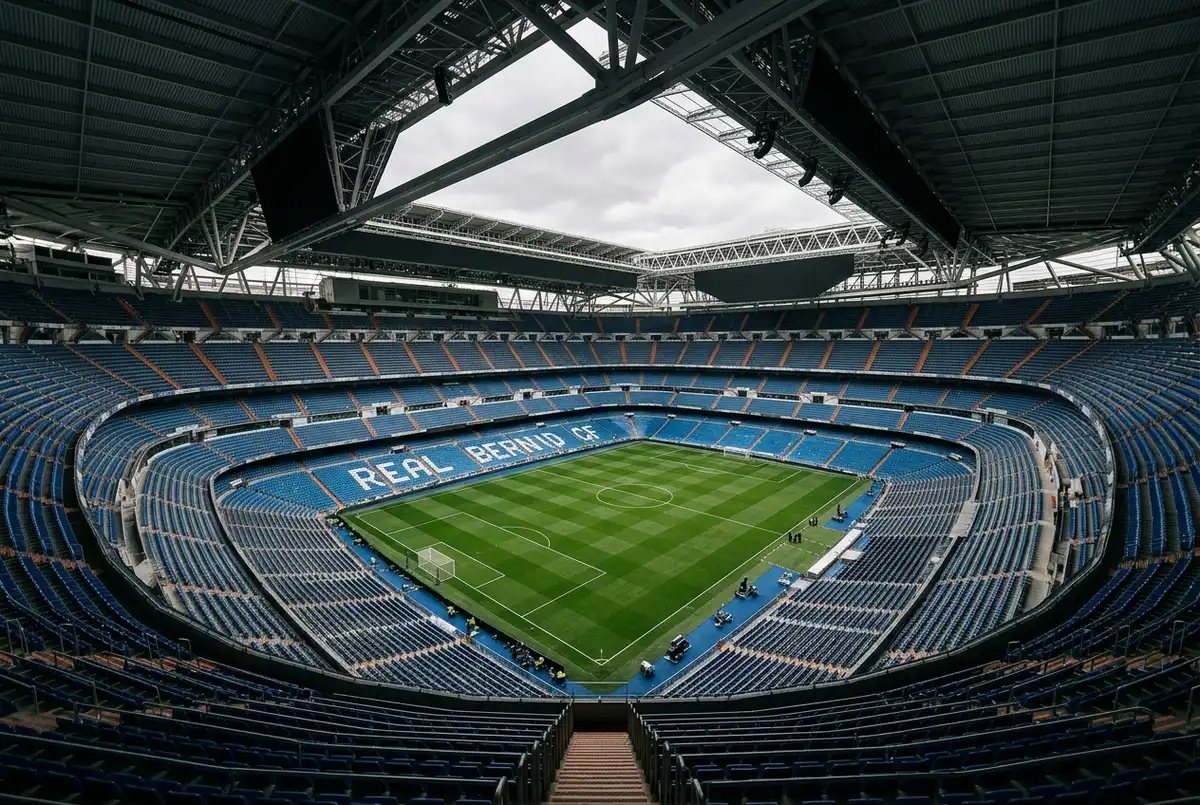
Santiago Bernabéu stadium capacity is 80,242 seats by Tourism Madrid's official figure, though Real Madrid's own 2030 World Cup bid papers list 78,297, and other trackers show 83,186 to 84,000. There is no single confirmed number yet.
 Santiago Bernabéu Stadium Entry Ticket From $40.58 · Cheapest way to see the stadium on your own See dates
On this page 8 sections
Santiago Bernabéu stadium capacity sits at 80,242 by Tourism Madrid’s official figure, though that number is far from settled: Real Madrid’s own 2030 World Cup bid papers list 78,297, and other trackers put the renovated stadium anywhere from 83,186 to 84,000. The gap between those numbers is the story, not a typo.
Capacity figures in circulation
Source:Tourism Madrid (esmadrid.com, City of Madrid tourist board)What is the capacity of Estadio Santiago Bernabéu in 2026?
Tourism Madrid’s official figure is 80,242 seats after the renovation, though Real Madrid’s own 2030 World Cup bid papers list 78,297, and other trackers show 83,186 to 84,000. There is no single confirmed number yet.
The official tourism board’s own page states the “final capacity remains 80,242 seats, one fewer than before,” while StadiumDB reports that both the FIFA Bid Book and the FIFA venue evaluation document for the 2030 World Cup bid estimate the new Bernabéu at 78,297 spectators. Separately, La Liga stated in June 2023 that the refurbishment gave the stadium a technical capacity of 83,186, and a later La Liga article put the total at 84,000.
| Source | Figure | What it measures |
|---|---|---|
| Tourism Madrid (esmadrid.com) | 80,242 seats | Official city tourism board figure |
| Real Madrid’s FIFA 2030 bid papers | 78,297 seats | Bid-book estimate |
| La Liga, June 2023 | 83,186 seats | League’s technical capacity figure |
| La Liga, January 2024 | 84,000 seats | Later league estimate |
Club president Florentino Perez summed up the uncertainty himself, telling the 2023 General Assembly: “we have authorized 80,000 spectators, give or take a thousand,” citing legal emergency-exit requirements.
“we have authorized 80,000 spectators, give or take a thousand”
StadiumDB.com, 2026 · source
Is Bernabéu the biggest stadium in Spain?
No. Wikipedia’s entry puts the Bernabéu second behind Camp Nou in Barcelona, which seats more. The Bernabéu is still comfortably Madrid’s largest football venue by a wide margin.
Is Santiago Bernabéu one of the biggest stadiums in the world?
At roughly 78,000 to 84,000 seats depending on the source, the Bernabéu sits well outside the handful of stadiums worldwide that pass 100,000, and Camp Nou alone already outseats it inside Spain.
Say a reader planning a Clasico trip assumes the Bernabéu is a 100,000-seat stadium because a friend told them so, then double checks and finds the real figure sits closer to 80,000. That smaller, harder-to-get capacity is worth factoring into resale ticket prices before committing to the trip.
When did Santiago Bernabéu Stadium open and why was it renamed?
The stadium opened in 1947 as Estadio Real Madrid Club de Futbol, nicknamed Chamartín by fans. The club’s General Assembly renamed it Santiago Bernabéu on 4 January 1955 in honour of club president Santiago Bernabéu, who led the club from 1943 to 1978.
What kind of roof does the Bernabéu have?
The stadium’s renovation added a retractable roof that lets the pitch be used in any weather and also helps cut noise escaping the bowl.
How many VIP boxes and tiers does the Bernabéu have?
Tourism Madrid lists more than 240 VIP boxes. The renovation also added a taller east stand carrying a 2,000 square metre atrium and 800 new accessible seats.
Has the Bernabéu’s capacity changed over the years?
Wikipedia’s capacity history runs from 100,000 at opening in 1947, up to 125,000 in the 1952 to 1978 standing-terrace era, down to 81,044 by the 1999 to 2020 all-seater period, before the recent renovation reset the number again.
To understand how that capacity connects to what visitors can actually book and see today, see is the Bernabéu Tour worth it, the other guide on this site.
Questions
Who designed the Santiago Bernabéu renovation?
Tourism Madrid credits the GMP, L35 and Ribas architectural group with the stadium’s renovation design.
What was the Bernabéu’s capacity before the renovation?
81,044 seats, a figure that held from 1999 until the 2019 to 2020 renovation began.
Why doesn’t Real Madrid give one official capacity number?
Different bodies measure different things: a legal emergency-exit limit, a technical capacity, and a bid-book estimate, and none of those figures are required to match exactly.
Does the Bernabéu’s capacity change for concerts or other events?
The seating figures above describe match-day football capacity. Non-football events can use different stadium configurations with their own capacity limits.